Early Earth: Asteroids melted the planet's first crust
·1 min read·Beginner
“
We thought we knew Earth's early history pretty well. Turns out, the first 500 million years were far wilder, with cosmic impacts playing a starring role.
In 30 seconds
01New research reveals giant cosmic impacts melted Earth's primordial crust.
02This explains the missing 500 million years of rock record from the Hadean Eon.
→
💡
What this means for you
For us mere mortals, it means Earth's origin story is more dramatic than we imagined. A vivid reminder of the sheer cosmic forces at play.
Smart search engine Perplexity AI needs serious muscle to grow. They just found it in Crusoe, who'll rent them a whole lot of computing power for years.
·2 min·2·Beginner
03Heat shaping the young Earth also came from asteroids, not just its interior.
0101
Where did half a billion years go?
There's a black hole in Earth's history, not exactly a hole, more like amnesia. We're talking about the first 500 million years, the Hadean Eon, spanning from 4.5 to 4 billion years ago. For a long time, scientists wondered why so few rocks from that period existed. They simply couldn't find them.
The classic theory stated our newborn Earth was a scorching inferno, with a molten mantle boiling away. This would have prevented a stable crust from forming. Basically, primordial chaos. But now it seems the chaos was also- external.
0202
Who melted the crust?
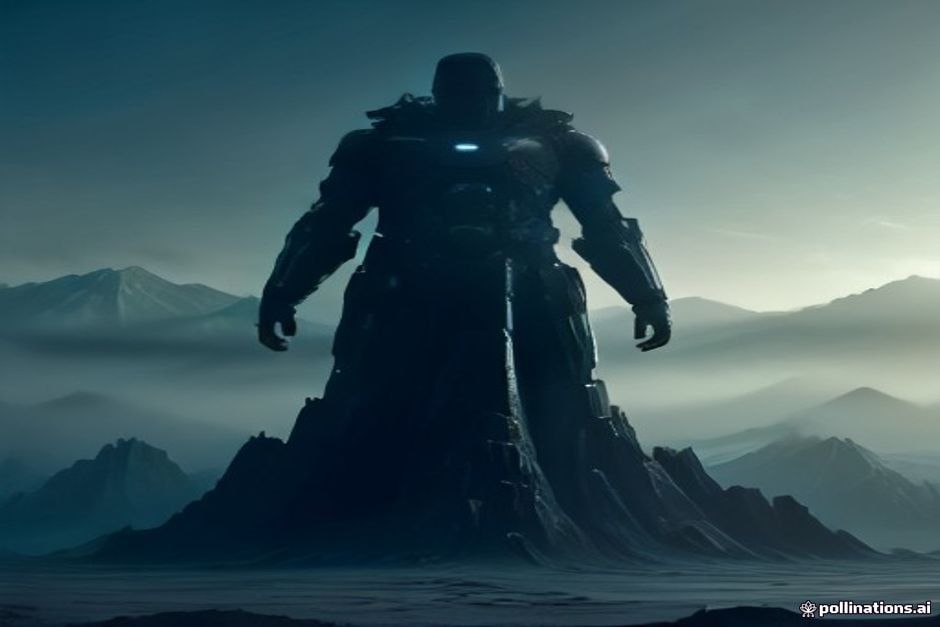
Well, it wasn't a fire-breathing dragon, but close enough. New research, featured on Ars Technica in July 2026, suggests Earth's primordial crust was melted not just by internal heat, but by a hellish cosmic bombardment. Imagine country-sized asteroids continuously slamming into the planet.
📬 Enjoying this article?
Get the best AI news every week, straight to your inbox.
These impacts weren't just making craters. They were so energetic they generated incredible heat, melting any surface rock formations. It's like trying to build a sandcastle while someone constantly throws buckets of water at you. Of course, no trace remains. The crust had no chance, being continuously melted and recycled.
0303
What does this change for our history?
This discovery isn't just a detail for geologists with shovels. It shows us our planet was born into an even more violent environment than we previously thought. The "heat" that shaped early Earth wasn't just an internal affair; it was also a matter of cosmic beatdowns.
Understanding the impact of these bombardments is crucial for reconstructing how the first landmasses formed, and who knows, maybe even the earliest life forms. Next time you look at a rock, think about the havoc asteroids wreaked billions of years ago. It makes any construction site look tame.
Picture an AI that doesn't just reply, but actually thinks like a seasoned sales pro. Salesforce Koa is here, and it’s set to make some big AI labs very uncomfortable.
Imagine boarding your train for work, only to find the tracks are a mess. In the Netherlands, it's not just a technical glitch, but something far more sinister.

 NUOVO
NUOVO